

Managing esophageal
health

Understanding the health of your esophagus
Living with eosinophilic esophagitis, or EoE, means paying attention not only to how you feel, but also to what is happening in your esophagus. Symptoms can change over time, and sometimes swelling and irritation can still be active even when your symptoms feel better. An endoscopy helps you and your care team see what’s happening in your esophagus. This information can help guide treatment, along with how you are feeling.
Why your esophageal health matters
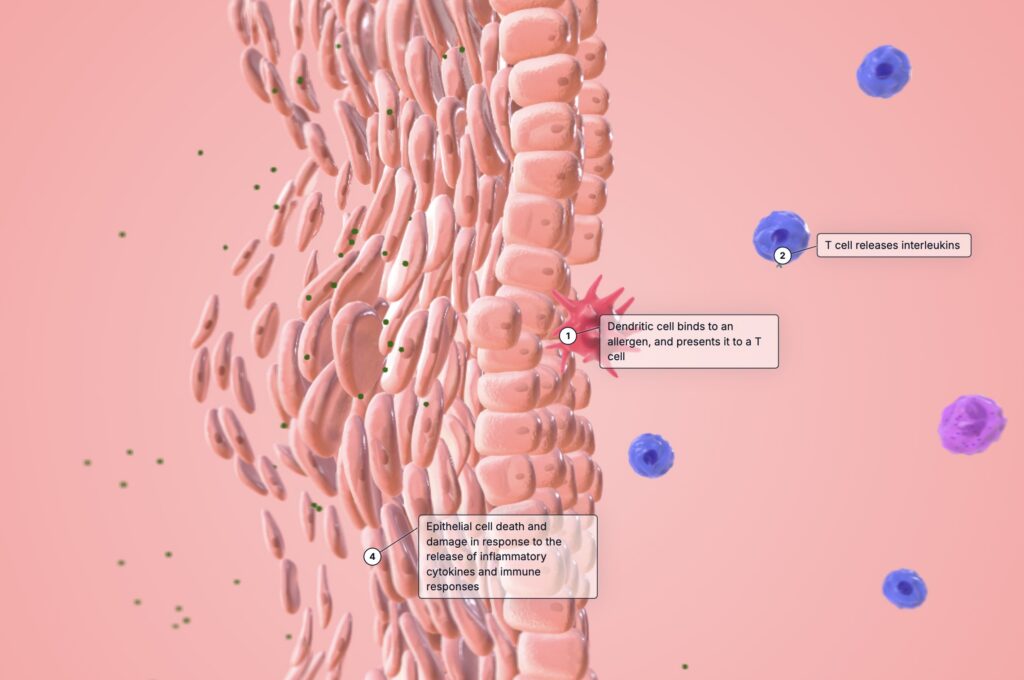
Your esophagus plays an important role in your everyday life. It moves food, drinks, and medicine from your mouth to your stomach so you can eat, drink, and swallow comfortably.
With EoE, the esophagus can become inflamed, which means swollen and irritated. Over time, this can lead to further swelling, narrowing, or scarring. These changes can make swallowing harder and may affect how your esophagus works.
How you feel is important, but it is only one part of the picture. Sometimes, inflammation or changes in the esophagus can continue even when symptoms seem better. That is one reason why checking on your esophageal health over time can be an important part of care.
Keeping up with your esophageal health can help you and your care team better understand how EoE is affecting your body and whether your treatment is working.
Want a clearer picture of what’s happening in your body? Explore this interactive digital esophagus to see the esophagus up close.
How EoE can affect your esophagus
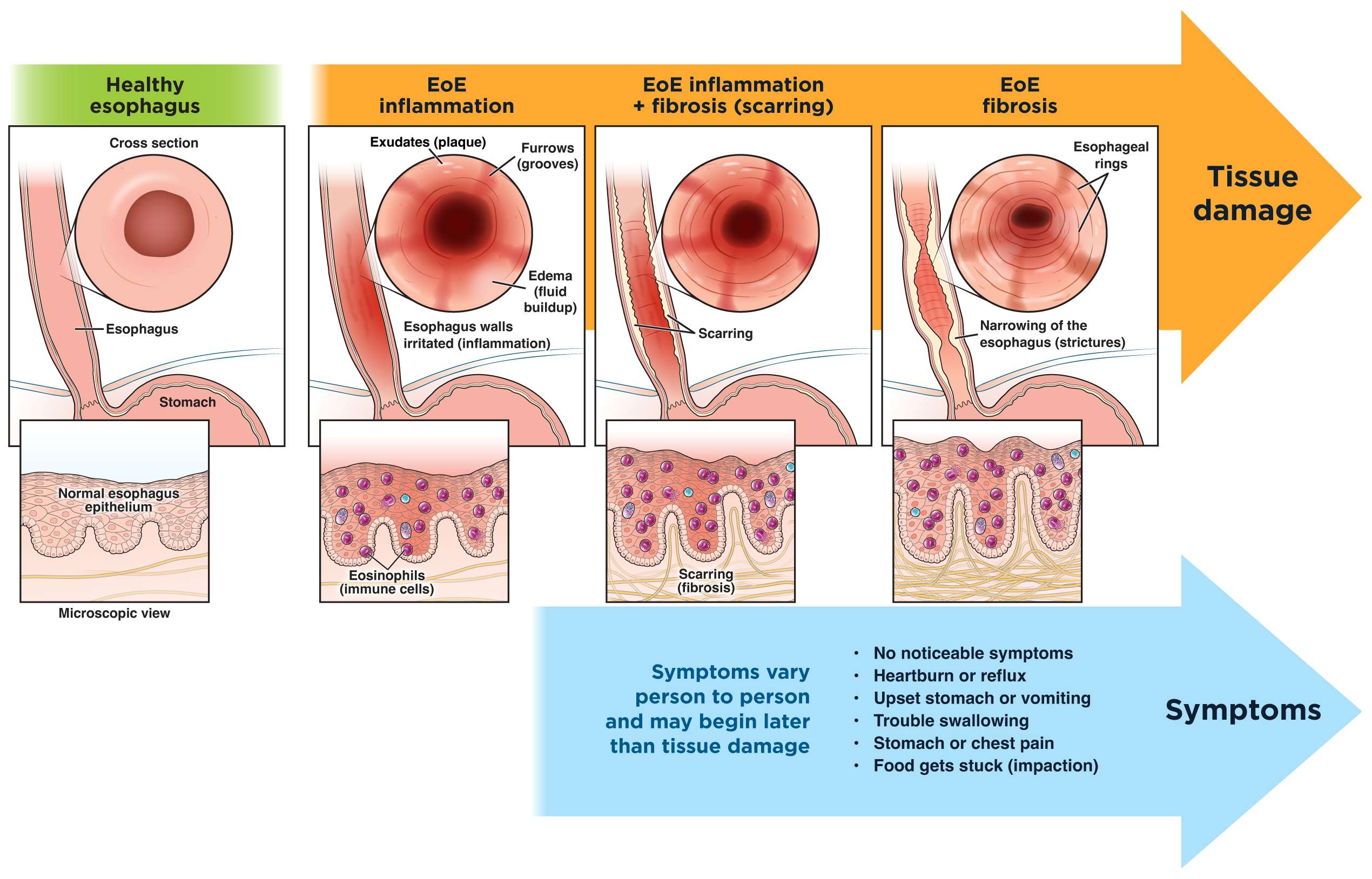
This illustration shows how EoE-related inflammation can affect the esophagus over time. It can help you understand why your care team may look beyond symptoms to check on the health of your esophagus.
Symptoms vary from person to person. They can include:
- Heartburn or reflux
- Upset stomach or vomiting
- Trouble swallowing
- Stomach or chest pain
- Food gets stuck (impaction)
- No noticeable symptoms
Why endoscopies matter in EoE care
An endoscopy is a procedure that allows your doctor to look inside your esophagus. It gives your care team a clearer picture of what is happening.
During an endoscopy, your provider may also take small tissue samples called biopsies. These samples are looked at more closely under a microscope to check for inflammation that may not be obvious from symptoms or visuals alone.
Together, endoscopies and biopsies help you and your care team:
Diagnose EoE.
Learn more about how EoE is affecting your esophagus.
Track how your treatment is working over time.
Better understand whether inflammation may still be present.
Help guide what comes next in your care.
What to expect before, during, and after an endoscopy
Endoscopies are not only used when EoE is first diagnosed. They are an important part of ongoing EoE care. You and your care team will work together to create a surveillance plan for your EoE.
Knowing what to expect during endoscopy can help you feel more informed and prepared.
Before
Before your endoscopy, your care team will give you instructions to help you get ready. These may include information about eating, drinking, medications, and what to expect on the day of the procedure. Before your appointment, you may want to:
Review your instructions early.
Know when to stop eating and drinking and taking your medicine.
Write down any questions you want to ask.
Ask whether someone needs to come with you or drive you home.
If anything is unclear, it is important to ask. Feeling prepared is part of good care.
During
You will talk with your care team before the procedure. They will help keep you comfortable and monitor you during the endoscopy. Your provider will use a thin, flexible tube with a small camera to look inside your esophagus. They may also take small tissue samples, called biopsies, to learn more about what is happening in the tissue of your esophagus. During the procedure:
Your care team will guide you through what is happening.
You may receive medication to help you relax or sleep.
The procedure is usually brief.
After
After the procedure, you will be taken to recovery and your care team will let you know what to expect next. You may hear some information about what your doctor saw during the procedure right away, while biopsy results may take more time. Your follow-up can help you better understand what the results mean and whether any next steps are needed.
Your follow-up may include:
Discussing whether treatment is working as hoped.
Deciding whether any changes to your care plan are needed.
Planning future follow-up.
You may experience some discomfort in your esophagus after the endoscopy, especially if you had biopsies taken or your esophagus was dilated.
For more information visit https://patient.gastro.org/upper-gi-endoscopy/.
Endoscopy FAQs

Have questions about endoscopy? Here are some common things to know. Be sure to follow up with your care team before your procedure if you have questions.
How do I prepare for an endoscopy?
Follow all instructions before the procedure. These may include guidance about eating, drinking, or medications. Review them early so you have time to ask questions if anything is unclear.
Can I eat or drink before the procedure?
Most patients should not eat or drink in the 10 hours before their endoscopy. However, instructions may be different depending on your care. It is important to follow the guidance you are given.
Should I ask about my medications ahead of time?
Yes. If you take medications regularly, ask whether there is anything you should know before the procedure. They can tell you if any changes are needed.
Will I receive medication during the procedure?
You may receive medication to help you relax or sleep, depending on how your care is being done. If you have questions about sedation or what to expect, your care team can explain it before the procedure.
Will the procedure hurt?
Many people worry about discomfort. Your care team will work to keep you as comfortable as possible during the procedure. If you feel nervous about pain or recovery, it is okay to bring that up before your appointment.
What happens during an endoscopy?
Your provider uses a thin, flexible tube with a small camera to look inside your esophagus. They may also take small tissue samples, called biopsies, to learn more about what is happening in the esophagus.
How long does an endoscopy usually take?
The procedure is usually brief. Your care team can tell you more about timing, including what to expect before the procedure begins and during recovery afterward.
When will I get my results?
You may hear some information soon after the procedure, but biopsy results may take more time. Ask your care team when to expect results and how they will be shared with you.
What can biopsy results help show?
Biopsy results can help your care team learn more about what is happening in the tissue of your esophagus. In EoE, your doctor is looking to see if eosinophils are present. They are also looking for inflammation (swelling or irritation) or scarring of the esophagus. This information can help your care team decide whether any next steps in care are needed.
The biopsy samples are taken to a lab where someone counts how many eosinophils are present in the tissue. Biopsy results are usually available within a week to 10 days, but ask your care team about the estimated timing.
What should I ask after the procedure?
It may help to ask when you can eat and drink again, when you can get back to normal activities, when results may be available, how you will receive the results, and who to contact if you have questions afterward.