The path to
remission

What does it mean to achieve & maintain remission for EoE?
Understanding the path to remission
Eosinophilic esophagitis, or EoE, is a chronic condition, which means it requires ongoing care. Even when symptoms improve, inflammation can still be active in the esophagus. Over time, that inflammation can cause lasting changes such as scarring and narrowing of the esophagus. But with the right treatment and follow-up, EoE can often be managed.
Remission is about more than feeling better in the moment. It is about understanding what is happening inside your esophagus. Each step you take toward remission can protect your esophageal health now and into the future.
Symptom relief and remission are not the same
Improving symptoms can feel like a major step forward, and it is. But with EoE, feeling better does not always mean the condition is well controlled.
That is why remission means more than symptom relief alone. It means looking at the bigger picture of how your EoE is behaving over time. Your care team may look at how you feel, what your esophagus looks like during an endoscopy, and what biopsy results show. Together, this information can help your care team understand whether your treatment is helping to control the inflammation and improve the health of your esophagus.
Remission is not just about getting through today with fewer symptoms. It is also about protecting your esophageal health for the future.
Ongoing care matters
One of the hardest parts of EoE can be that symptoms and inflammation do not always improve at the same time. You may be swallowing more easily, have fewer noticeable symptoms, or not have any symptoms while inflammation is still present in your esophagus. That is one reason follow-up care remains so important, even when things seem to be getting better.
Ongoing check-ins help your care team understand whether your current plan is working as expected. They can help answer questions like:
I feel like my symptoms are improving but do I still have underlying inflammation that needs attention?
Is the current treatment helping my esophagus heal?
Has anything changed that may call for a different approach?
What should the next step in my long-term care look like?
Follow-up care may include office visits and conversations about how treatment is fitting into your daily life. Your care team may also use endoscopy with biopsy to look for inflammation and signs of healing in your esophagus. These check-ins are not just extra steps. They are part of staying ahead of EoE and making informed decisions over time.
If you are unsure why testing or follow-up is recommended when you feel okay, it is okay to ask. Understanding the purpose behind those visits can make EoE care feel less confusing and more manageable.
There is more than one path to treatment
EoE care works best when it’s built around you. Your clinician will help you find a treatment plan that fits your symptoms, lifestyle, and goals—and that plan may change over time as your needs change.
Treatment options may include:
Dietary therapy, which may involve removing certain foods and adding them back with guidance from your care team.
Medications, such as proton pump inhibitors (PPIs), swallowed corticosteroids, or biologics. These options can help manage EoE in different ways, so talk with your clinician about what may be right for you. Learn more about medication options for adults with EoE.
Esophageal dilation, which may be recommended if narrowing has developed in your esophagus. Esophageal dilation is used to gently stretch or open the esophagus. You may also receive medication treatment to reduce inflammation.
Treatment isn’t one size fits all. What works for someone else may not be right for you. The goal is to find an approach that helps you feel better and keeps your EoE under control over time.
Long-term care is part of living with EoE

EoE is a long-term condition, so your treatment plan may need to change over time. What works well now may need to be adjusted later. That does not mean you are failing. It means EoE care often needs ongoing attention.
Long-term management can include:
Keeping up with follow-up appointments.
Talking openly with your care team about your symptoms.
Understanding your test results and what they mean.
Revisiting treatment decisions as your needs change.
Monitoring your diet, especially when trying new foods or have changes to your normal diet.
Having a plan for both everyday management and stressful moments.
Remission is not a finish line you reach once and never think about again. It is part of an ongoing process of caring for your health.
Stay involved in the conversation

You do not need to have every answer. But knowing what remission means can help you take a more active role in your care.
To better understand your path to remission, you may want to ask:
How are we measuring whether my EoE is under control?
Am I only feeling better, or are there signs that my esophagus is healing, too?
How often should I have follow-up visits or testing?
What does remission mean for me?
If my symptoms improve, do I still need ongoing monitoring?
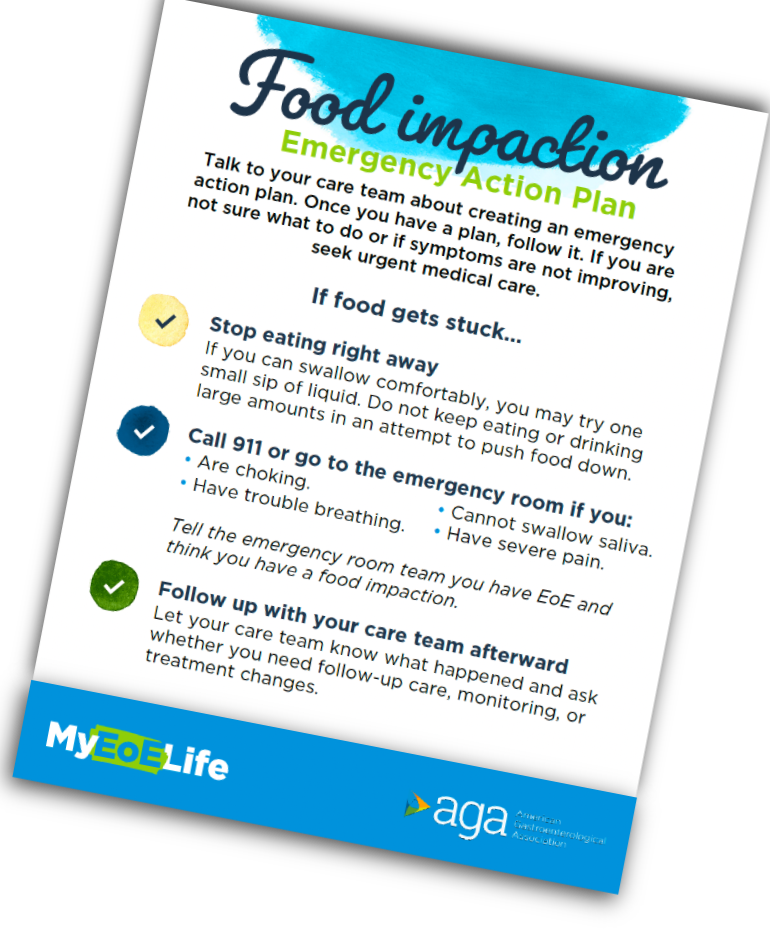
Food impaction
emergency action plan
Managing EoE is not just about day-to-day care. It also means being prepared for stressful moments, like when food gets stuck in the esophagus. This is called a food impaction and is a common complication of EoE. A food impaction can be scary, and it can be hard to remember what to do in the moment.
Creating an emergency action plan with your care team can make managing a potentially scary situation easier for you and those around you.
This action plan is here to help you understand what steps to take, when to get emergency care, and what to do after the immediate problem has passed. Save it to your phone or print copies so it is ready if you need it.
How well are you managing your
EoE?
This short quiz is designed to help you reflect on your EoE management and spark conversations with your care team about your next steps.
Questions
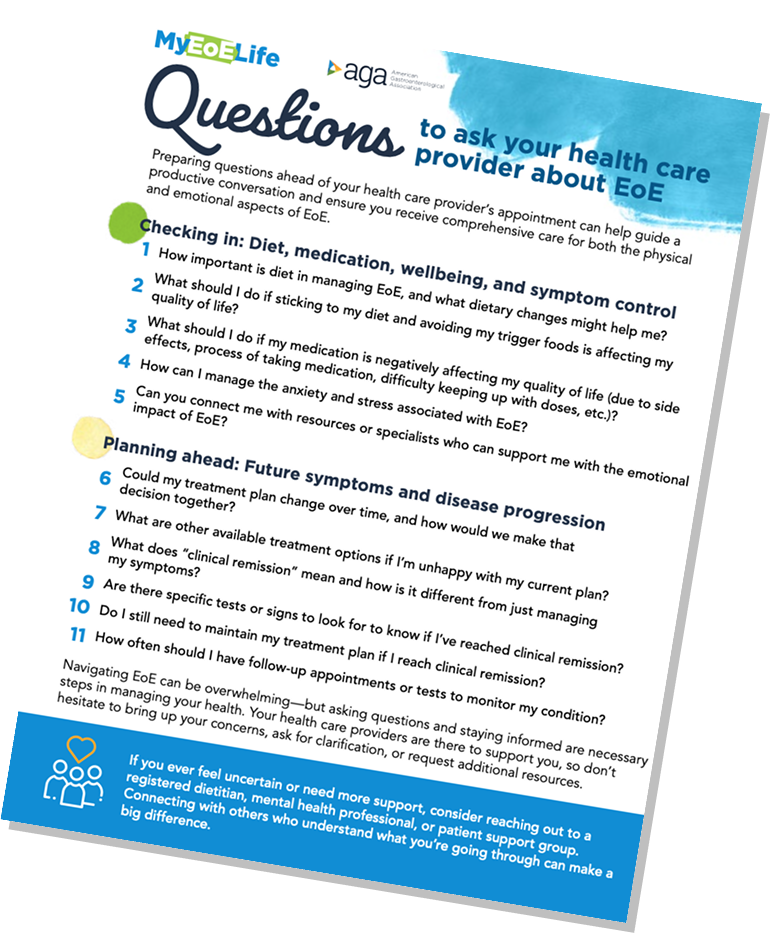
to ask your health care provider
Achieving and staying in remission starts with staying informed, so it helps to have a plan and an open line of communication with your care team. Whether you’re working toward remission or trying to stay there, your questions can shape the care you receive. You can start with something simple, like:
“I’m feeling better, but I want to make sure we’re actually keeping my EoE and the inflammation under control. What should we be looking for next?”
We created a guide with key questions to help you talk with your health care provider about remission, treatment options, and how to monitor progress over time. It’s designed to help you feel more prepared and confident at your next appointment.